
Tobin Tax has immense potential when used along with complementary policies such as counter-cyclical and macro-prudential measures.
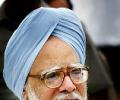
Prime Minister Manmohan Singh on Tuesday ruled out imposition of Tobin tax on capital inflows in the country, saying the situation in India has not not reached a problem stage.

The Tobin tax, first proposed by Nobel laureate James Tobin in 1972, is a sales tax on cross-border currency trades, aimed at discouraging speculation by making currency trading more costly.

Reserve bank of India governor Duvvuri Subbarao has said that India is not contemplating imposing Tobin Tax on capital inflows, but did not rule out introducing it later.
Economists urged FM to rationalise indirect taxes and impose Tobin tax.

Finance Minister Pranab Mukherjee is likely to oppose suggestions to introduce a financial transaction tax, commonly known as tobin tax.

Tobin tax and a financial sector levy could be considered, says former RBI governor. India should manage its capital account irrespective of high or low inflows, Y V Reddy, former governor of the Reserve Bank of India (RBI), said.

There are a number of factors that helped India remain relatively unscathed. Some of them are to do with RBI and some of them are to do with the Indian economy.

'Is this the only way for India to become a $5 trillion economy?' 'When you have unused foreign exchange here, why borrow more dollars?'

'If credit is not available, people will postpone buying. That's what has happened.'

India has remained obsessed with cheap capital and infrastructure spending when instead the central constraint on Indian development remains the abysmal quality of Indians' skills, says Mihir Sharma.
 © 2026 Rediff.com - Advertise with us - Disclaimer - Privacy Policy - Sitemap - Feedback - About us - Terms of use - Grievances